Property damage
A single limb through a conservatory roof or a garage costs more than the removal, and the excess and claim history stay with you.
Tree removal & felling
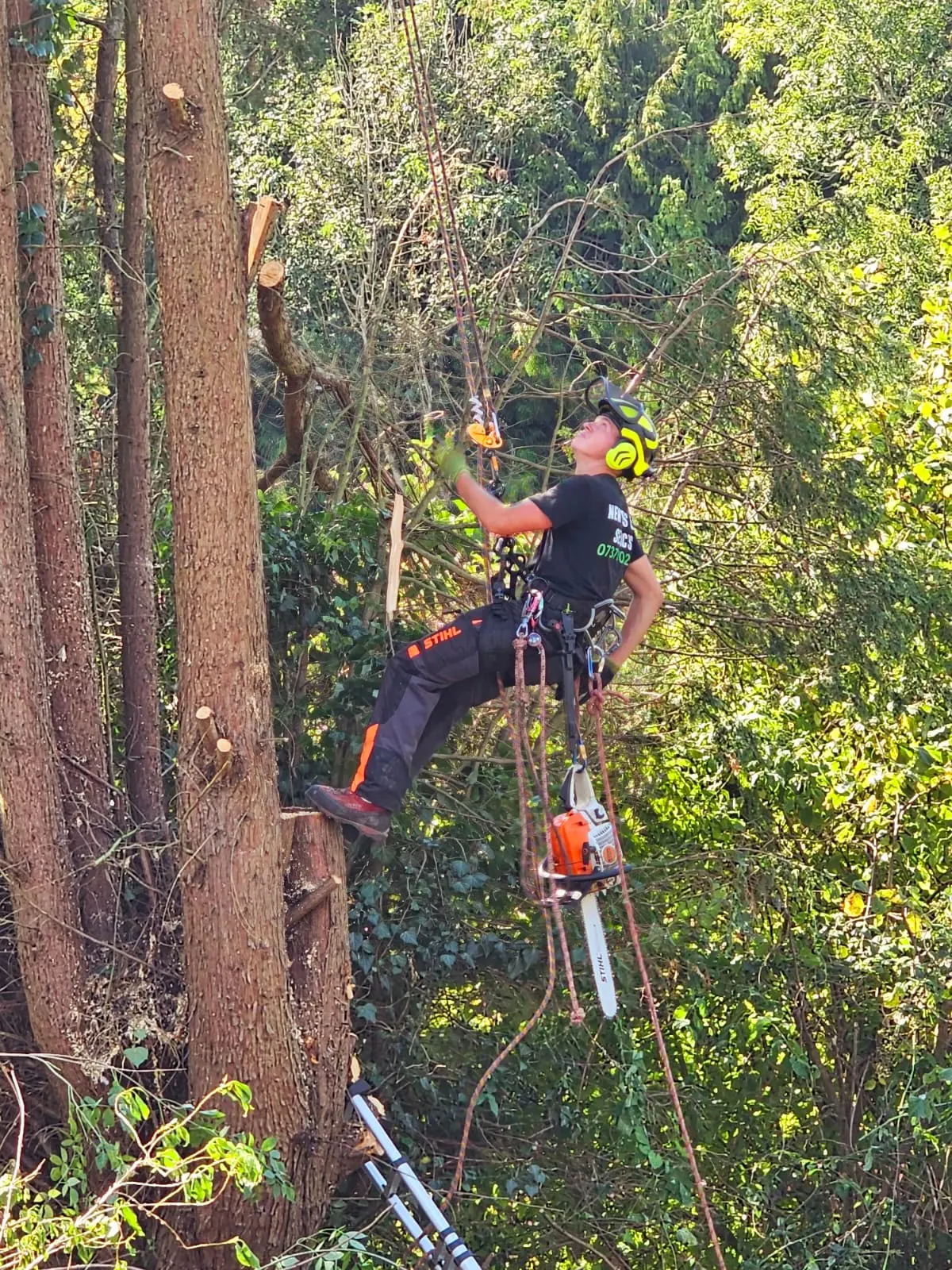
A tree that has outgrown its garden, died back, or started leaning over a roof does not get cheaper or safer to deal with. We take it down section by section with rigging where there is no drop zone, chip the arisings on site, and hand the space back clear, usually inside a single working day.
12 years in the canopy, 59+ five-star Google reviews, £10m employers' and £5m public liability cover.
12 yrs
Hands-on felling and dismantling experience across the borders
£15m
Total insurance cover, £10m employers', £5m public and products
NPTC
City & Guilds certificates in felling, climbing and aerial rescue
7 days
Typical wait for a free site visit, with the written quote the same day
The service
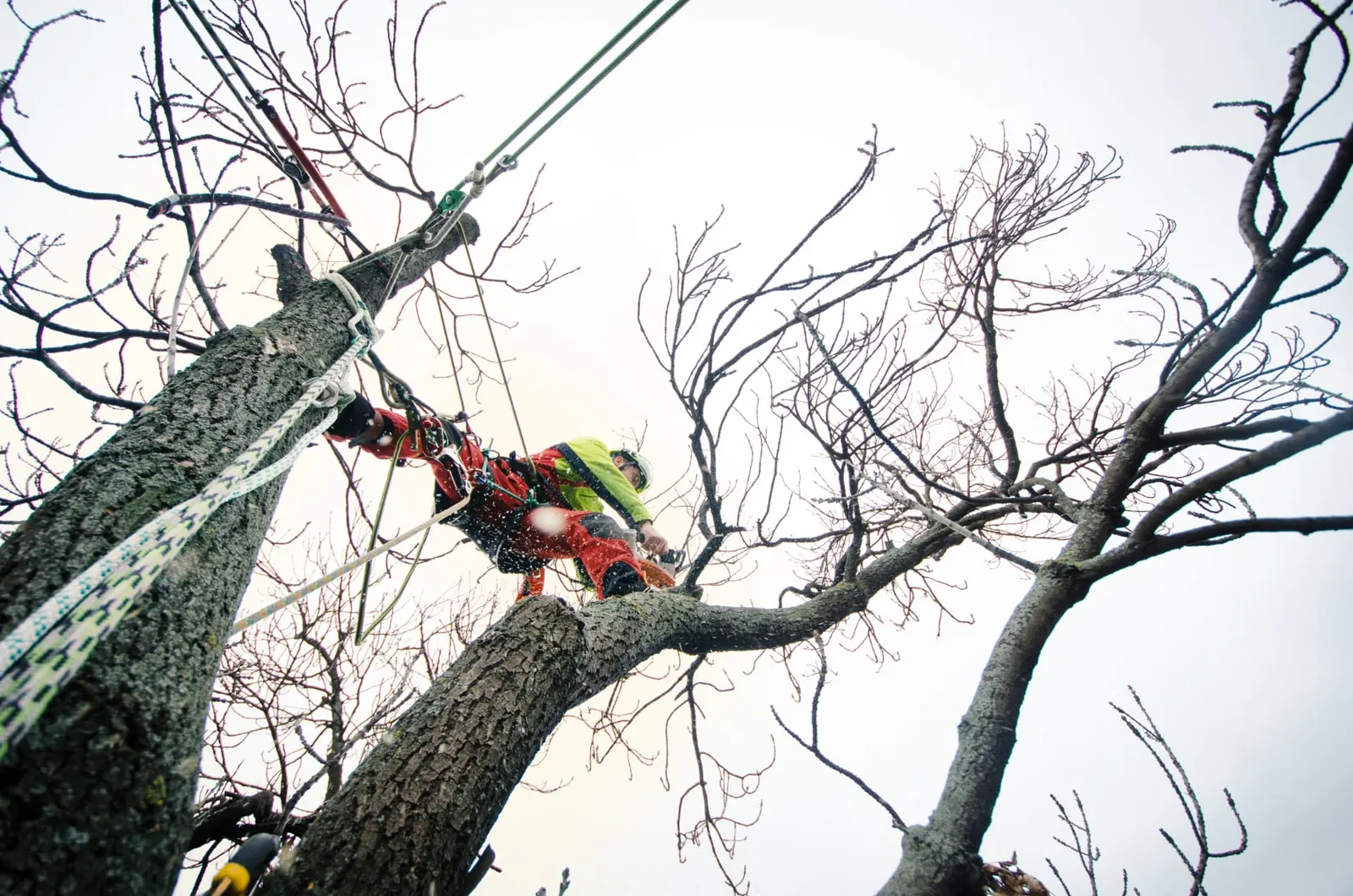
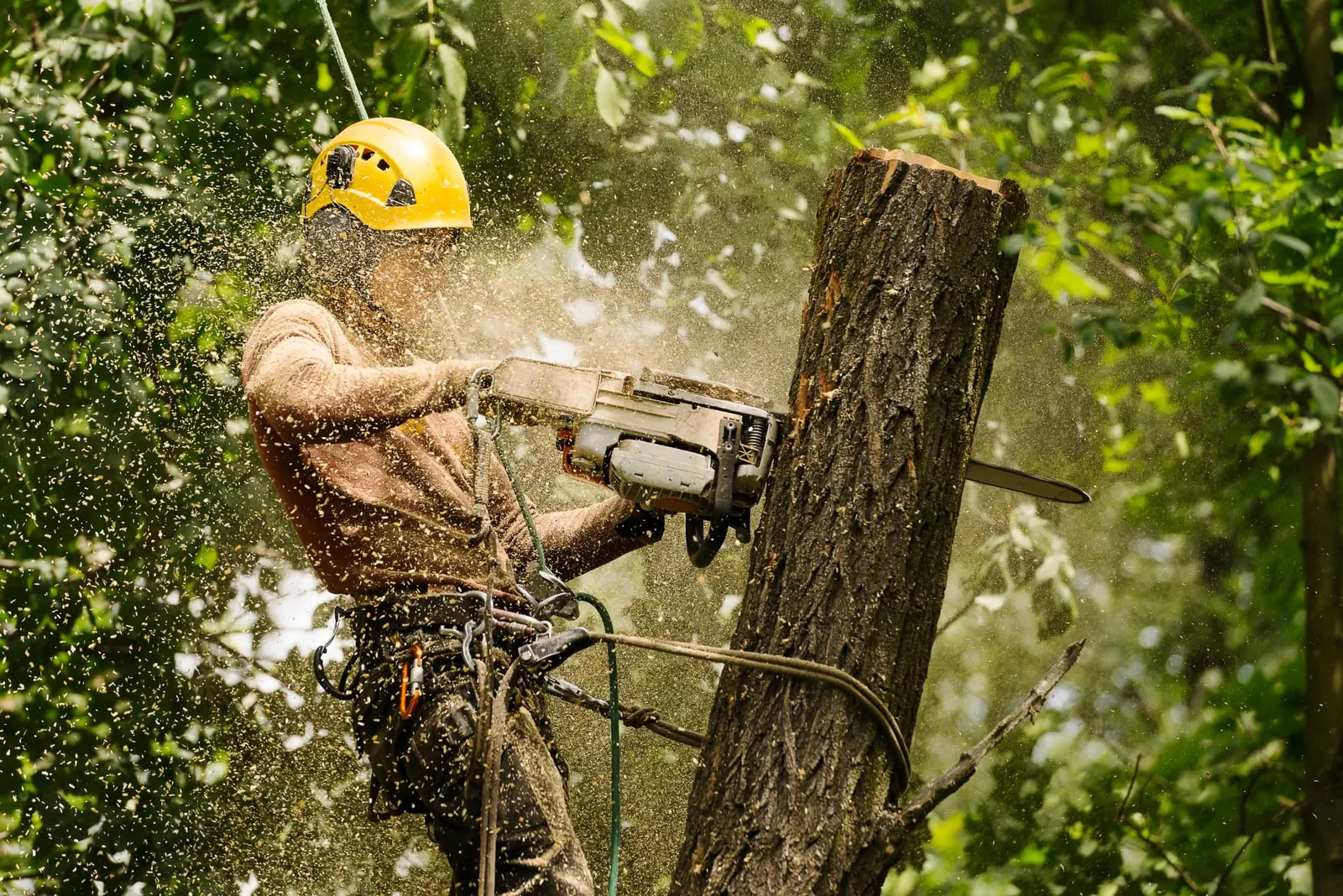
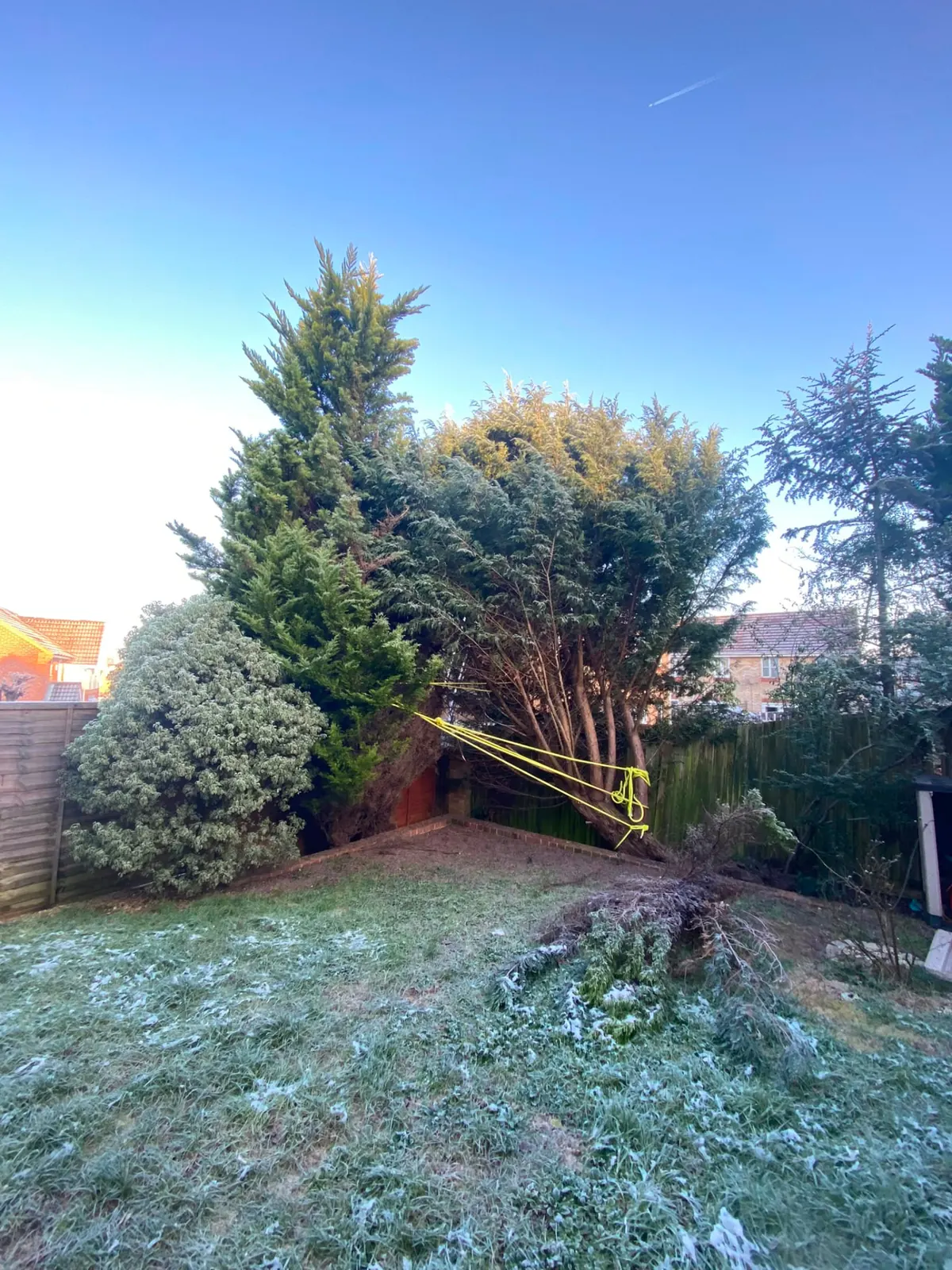
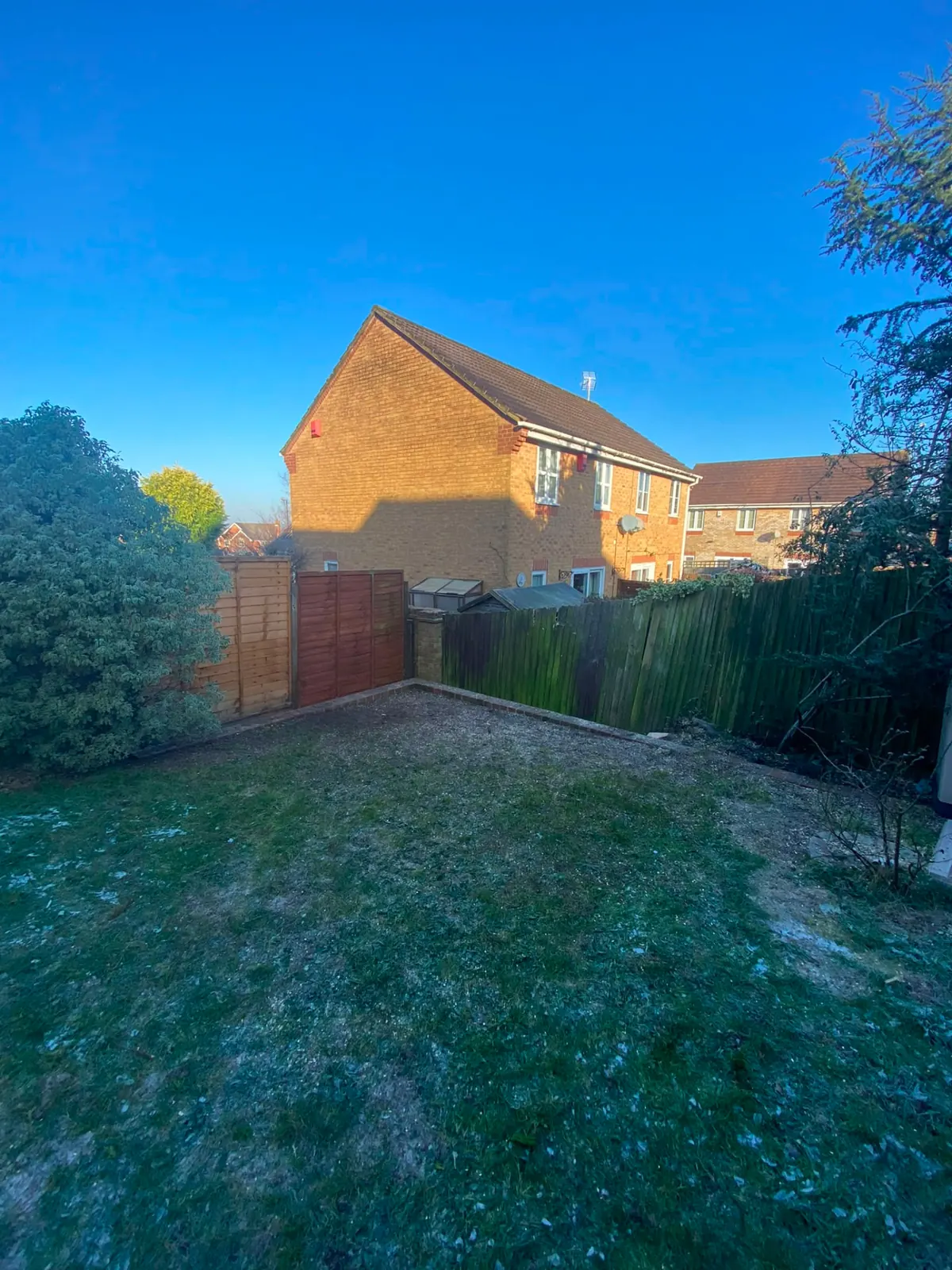
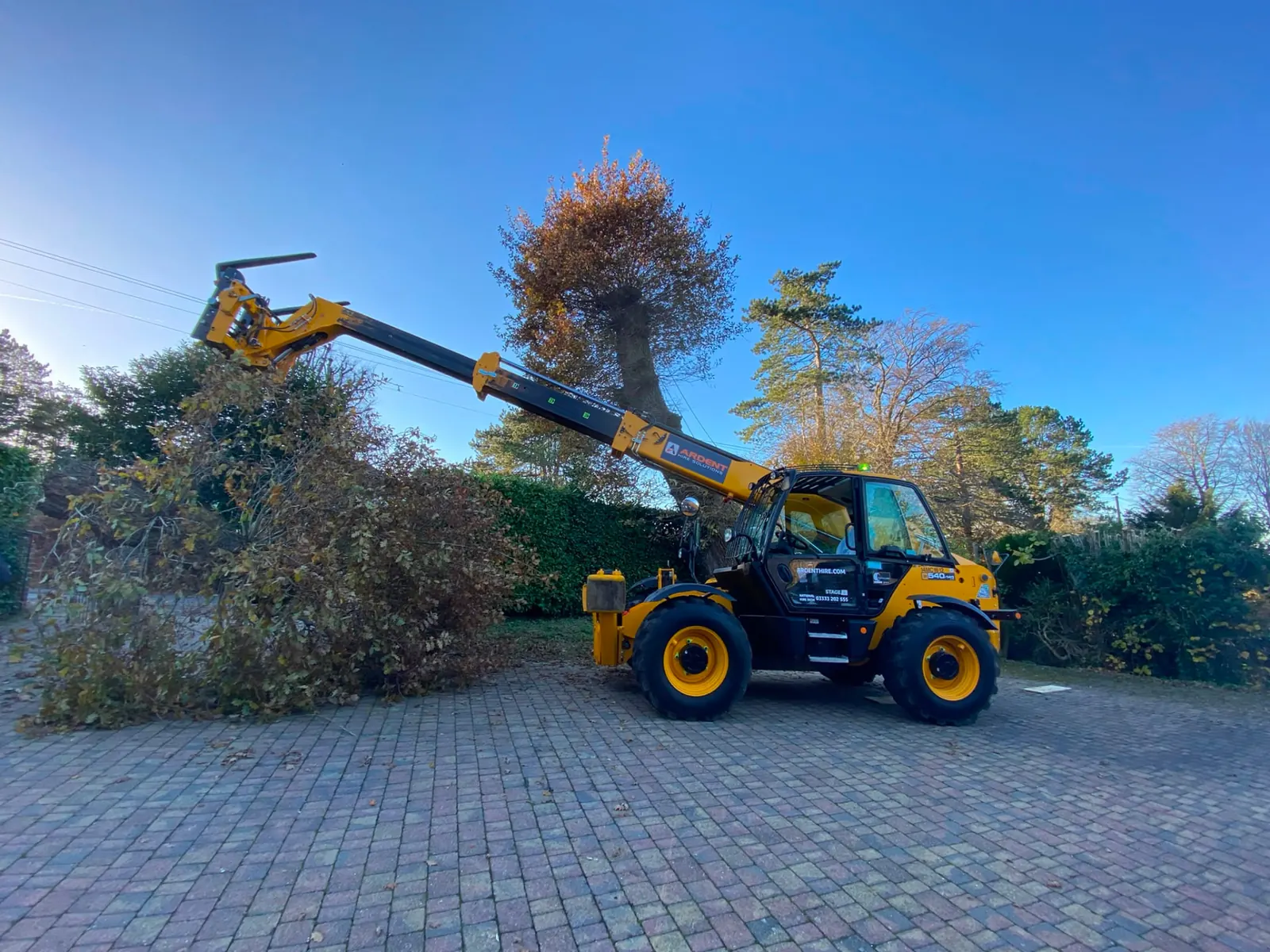
Tree removal is the complete take-down of a tree, from the first cut to the last barrow of chip. On an open site with a clear drop zone it can be a straight fell: one hinge cut, one direction, one trunk on the ground. In most gardens across Oxted, Sevenoaks and Tunbridge Wells there is no such luxury, there is a conservatory, a greenhouse, a neighbour's fence, a phone line or a pond exactly where the tree wants to go. That is when it becomes a climbing and dismantling job: the crew ropes into the canopy, takes the limbs off in sections, and lowers each piece under control on rigging lines.
It is for homeowners with a tree that has become a liability rather than an asset, for landlords and managing agents dealing with a tenant complaint, for builders who need a plot cleared before groundworks, and for anyone who has had a structural report or an insurer point at a tree near a wall. It is needed when a tree is dead, structurally failing, diseased beyond recovery, planted far too close to a building, or simply so large that it has taken the garden's light and root space for itself.
Professional help matters here for one blunt reason: a section of green hardwood weighs far more than people expect, and it only has to travel a short distance to write off a roof, a car or a person. Jack holds NPTC and City & Guilds certificates covering chainsaw maintenance and cross-cutting, felling up to 380mm, tree climbing and aerial rescue, and aerial cutting with free-fall techniques. The work is covered by £10m employers' liability and £5m public and products liability. Both of those exist for the ten seconds when something does not go to plan.
Homeowners, landlords, managing agents, farms, estates and builders across the Surrey, Kent and Sussex borders.
Dead or dying trees, storm damage, structural failure, subsidence concerns, trees too close to a building, or a plot that needs clearing.
Take-down, sectional dismantling and rigging where required, arisings chipped and cleared, and the site swept before we leave.
If the tree carries a TPO or sits in a conservation area, we make the application to the council on your behalf.
What happens if it's left
The awkward truth about a declining tree is that it looks the same for two years and then changes in one night of wind. Deadwood dries, gets brittle, and drops without warning. A crack at a union widens quietly under every gust until the limb tears out and takes a strip of bark and cambium down the trunk with it. Fungal brackets at the base mean the decay has already been working through the butt for a long time before anything showed on the outside.
The cost curve moves in one direction too. A planned removal is a scheduled day with the right kit, clear access and a price agreed in advance. A tree that has already come down across a driveway is an emergency call-out, often with a fence, a shed or a car underneath it, and often at a weekend. The tree work is the cheap part of that bill.
The most common mistakes we get called out to fix are all the same shape: hiring on price alone from someone with no insurance certificate, letting a general landscaper 'have a go' with a hired chainsaw, topping a tree flat in the hope it will behave, and cutting a protected tree without checking with the council first, which is an offence that can carry a serious fine even when the tree genuinely needed work.
A single limb through a conservatory roof or a garage costs more than the removal, and the excess and claim history stay with you.
If an uninsured contractor is hurt in your garden, or a limb reaches the pavement, the exposure lands with the homeowner.
Basal rot and included bark get worse every season. What could have been a reduction becomes a full removal.
Limbs over a boundary, blocked light and dropped debris turn into formal complaints far more often than people expect.
Cutting a TPO or conservation-area tree without consent is prosecutable. We check and apply for you before a saw comes out.
Storm work is reactive, out of hours and harder. Planned work is scheduled, quoted in advance and always cheaper.
What you get
A three-man crew with the right kit means most domestic removals start and finish in a single visit rather than dragging across a week.
Rigging and lowering lines mean sections come down at walking pace, not free-fall, even over patios, ponds and glass.
£10m employers' and £5m public and products liability cover, held by the crew doing the actual cutting.
Chipping and clearance are part of the job, not an extra line added once the tree is on your lawn.
Removing one oversized tree typically returns hours of daylight to a garden, and gives the remaining planting room to grow.
The hazard is gone, the paperwork is handled, and there is no lingering question about the limb over the roof.
No two removals are priced the same, and the difference almost never comes down to the height of the tree. It comes down to what is underneath it, how the timber gets off site, and what the tree has been doing structurally for the last decade. Here is what actually changes the method.
Straight felling is only appropriate where there is a drop zone at least as long as the tree, on ground that will not send the trunk skidding, with no overhead services. Paddocks, woodland edges and larger rural plots around Edenbridge, Lingfield and Godstone often qualify. The cut is a directional notch and a back cut with a hinge left to control the fall, and it is over in minutes.
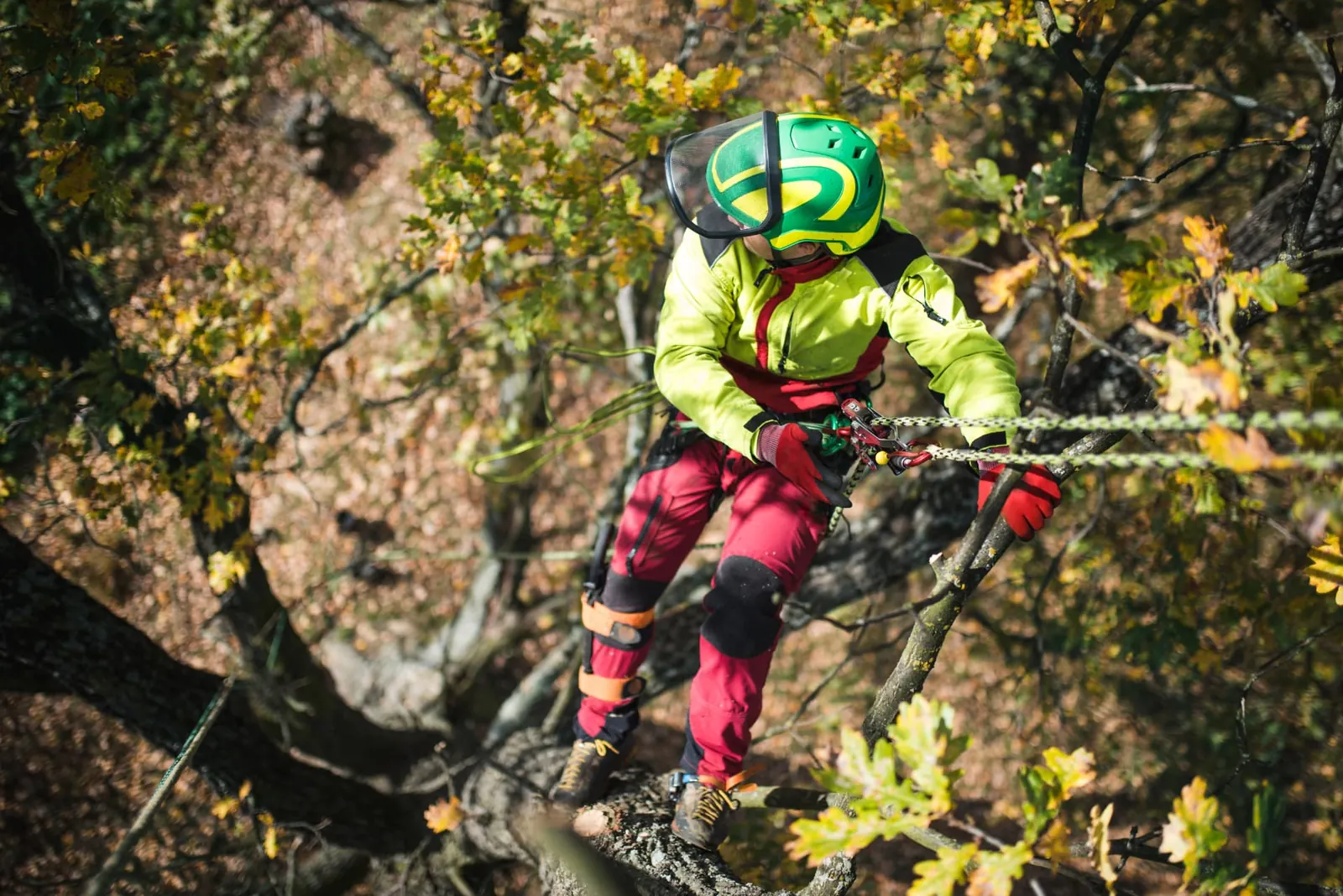
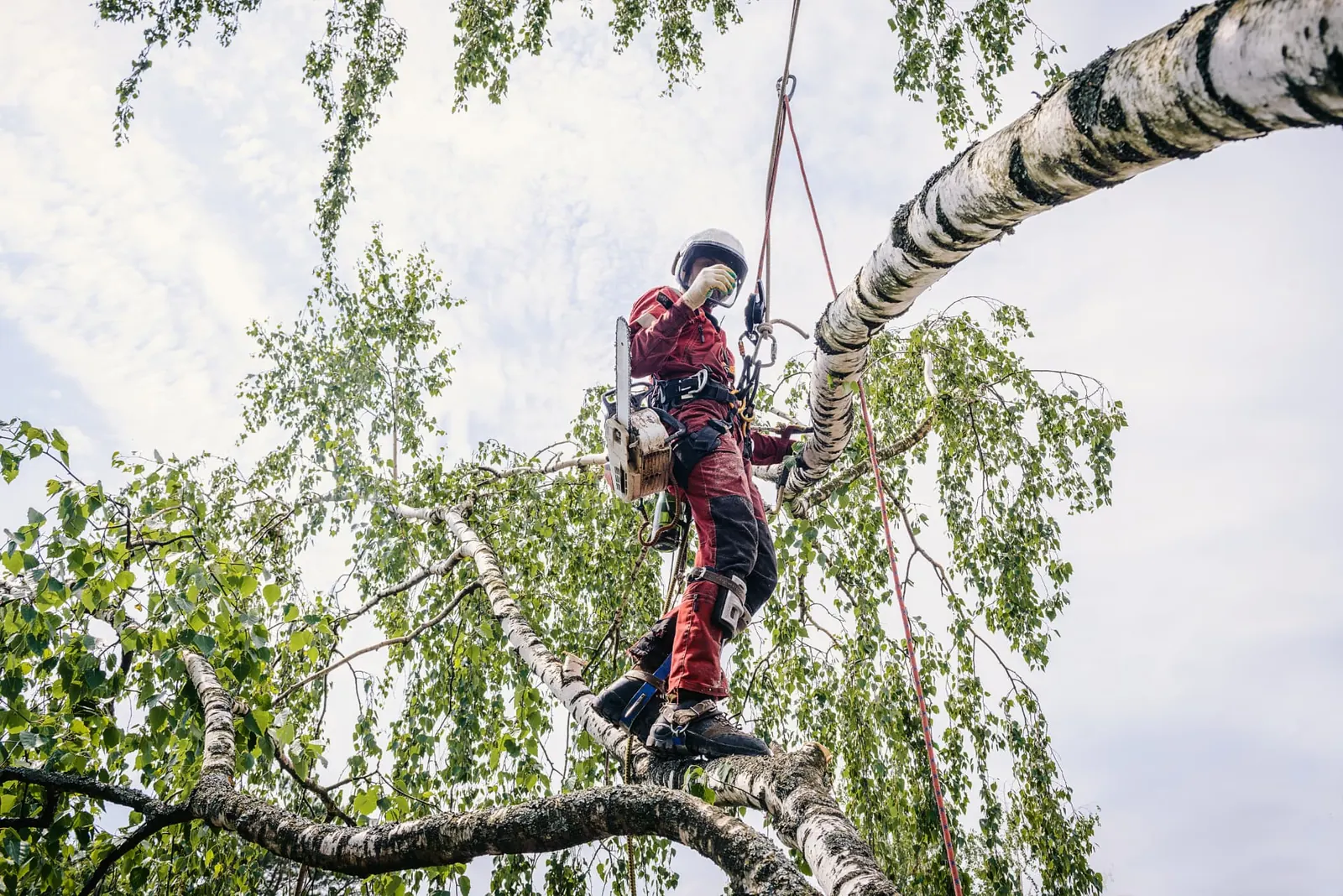
Sectional dismantling is the standard method in town gardens in Sevenoaks, Bromley, Redhill and Tunbridge Wells. A climber ascends on rope and harness, works out to the tips, and removes the crown in manageable pieces before stepping the stem down in blocks. Where the piece cannot simply be dropped, it is tied into a rigging line running through a block and lowered by a groundsman on friction, which is how a heavy limb comes to rest a metre from a greenhouse rather than through it.
Rigging equipment is rated, inspected kit: polyester and hollow-braid rigging lines, steel and aluminium blocks, slings, a friction device such as a bollard or Portawrap, and karabiners rated far beyond the shock load expected. The groundsman running the line controls the speed of descent, so the load never reaches free-fall speed and the anchor point never takes the full shock.
Where the anchor has to sit below the piece being cut, common on a stem with no useful branch structure left, or on a decayed tree where the upper wood cannot be trusted, the crew uses negative-blocking, taking smaller pieces with a shorter drop and a deliberately reduced shock load. It is slower, and that slowness is the point.
Species changes the plan. Oak and beech are dense and heavy, so section sizes come down and rigging loads go up. Ash is increasingly affected by ash dieback across Kent and Surrey, and dieback makes wood brittle and unpredictable to climb, badly affected ash is often taken from a MEWP or dismantled with far more conservative section sizes rather than climbed at all. Poplar and willow are soft, fast-grown and prone to tearing at unions. Conifers such as leylandii are straightforward to step down but produce enormous volumes of brash for the chipper.
The timber itself has value to you. Cordwood can be left cut to length for a log burner, or taken away. Seasoned logs are available at £100 per tonne bag and woodchip at £50 per truck load of up to 3 tonne, delivered locally, useful if you were about to buy mulch for beds and paths anyway.
A removal leaves a stump unless you say otherwise. You can leave it as a low-cut feature, have it ground out below ground level so the ground can be turfed, planted or paved, or have it chemically treated where grinding access is impossible. Species that sucker aggressively, poplar, willow, cherry, lime and false acacia among them, will send up regrowth from the root plate for years if the stump is simply cut and abandoned, so stump grinding or poisoning is usually booked at the same time.
If you intend to build on the spot, tell us at the quote stage. Grinding depth, root plate removal and how much of the root system is left in the ground all matter to a groundworker, and it is far cheaper to get that right on the first visit than to bring a machine back.
Domestic work is about access, protection and tidiness: boards over lawns, sheeting over borders, careful barrowing through a side gate, and a garden left cleaner than it was found. Commercial and estate work adds coordination, pedestrian and traffic management, working around a live site, agreed hours to keep noise away from a business day, and documentation to satisfy a facilities manager.
Protected trees are their own process. Under a Tree Preservation Order, work needs the council's written consent; in a conservation area, six weeks' written notice is required. We handle those applications for you across Tandridge, Sevenoaks, Tunbridge Wells, Bromley and the surrounding authorities, including the case for why removal is justified. Dead, dying or dangerous trees have exemptions, but they are narrower than most people assume, and getting it wrong is expensive.
Questions
Related work
A tree that has split, is partially uprooted, or is leaning further than it should is not a job to approach without a proper plan.
A stump left in the lawn is not a finished job, it is an unfinished one, a trip hazard, a mower obstacle, and in some species a launchpad for years of suckering regrowth.
A tree down across a driveway, a limb through a roof or a trunk leaning further after every gust is not a job for the online form.
We cover Oxted, Westerham, Edenbridge, Sevenoaks, Biggin Hill, Bromley, Tunbridge Wells, Redhill and the surrounding villages, see the towns our tree surgeons cover across Surrey and Kent, browse all tree surgery services, read about Jack and the crew, or go straight to the free tree surgery quote form.
Free quote
Send the form or call and we will book a free site visit, usually within 7 days. You get an honest opinion on whether the tree needs removing at all, and an itemised written quote the same day as the visit, no obligation, no sales call afterwards.
Call 07375 701290Five Pebble Hill Cottages, Westerham Road, RH8 0EA · Mon–Sat 8am–9pm · Sunday closed