
Wrong species for the soil
A tree unsuited to local clay or greensand conditions struggles from year one and rarely recovers without intervention.
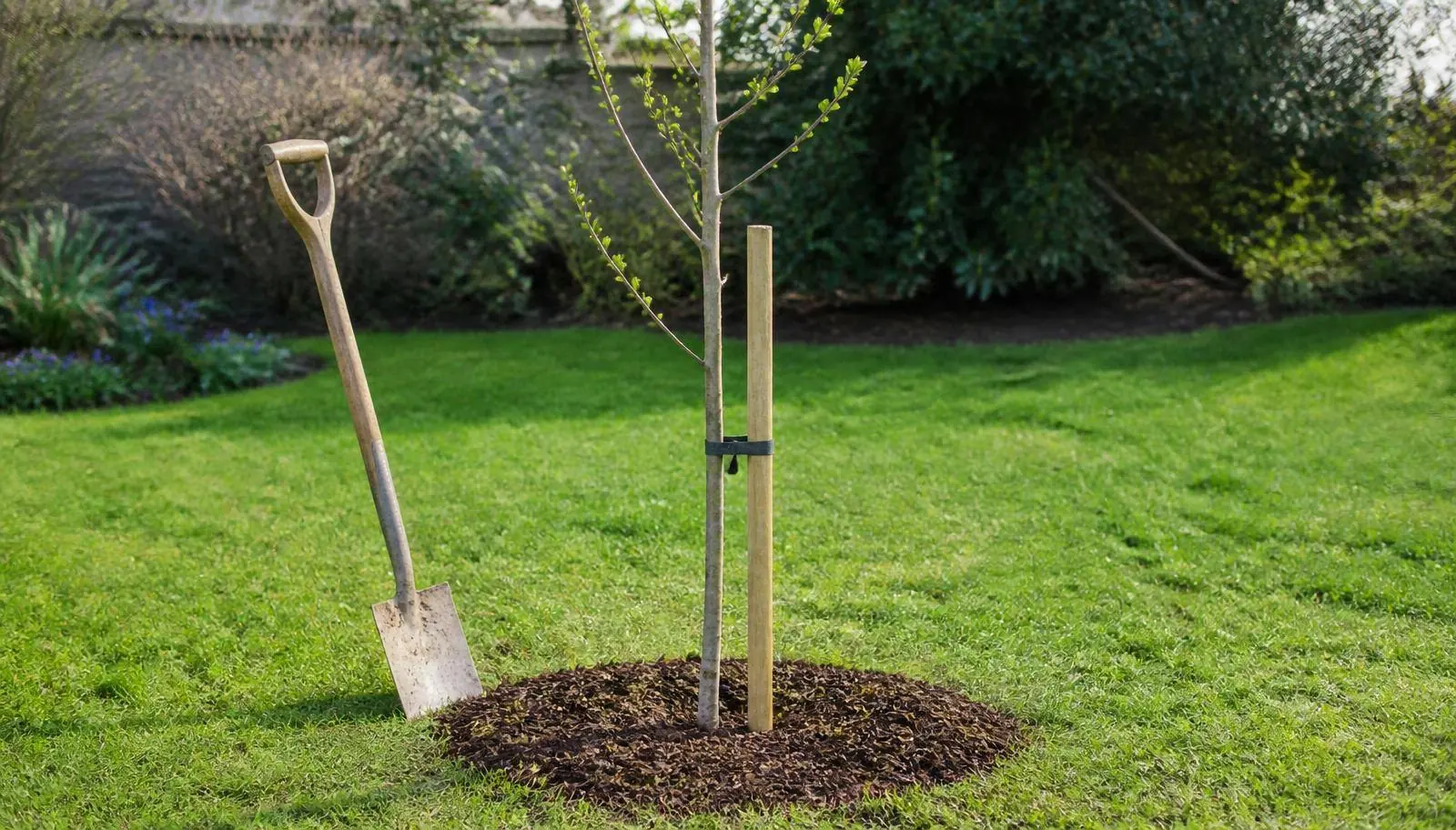
Tree planting
Planting a tree that thrives in ten years' time starts with picking the right species for your soil, not the nicest one in the nursery photo. We plant, stake, mulch and set up a watering routine so the tree establishes properly, not one that struggles for three years and gets replaced.
12 years matching species to Surrey and Kent soils, 59+ five-star Google reviews, free quotes.
12 yrs
Selecting and planting trees suited to local clay and greensand soils
£15m
Total insurance cover, £10m employers', £5m public and products
NPTC
City & Guilds certificates in felling, climbing and aerial rescue
7 days
Typical wait for a free site visit, with the written quote the same day
The service
Tree planting is more than digging a hole and standing a sapling in it. It starts with reading the site, soil type, drainage, aspect, existing trees and root competition, overhead and underground services, and what the tree is actually meant to do once it is grown: screening, shade, replacing something removed, or restoring a boundary line. Jack picks species and stock type to suit the site rather than defaulting to whatever is fashionable, then plants, stakes and mulches it properly so it has a fair chance of establishing.
It is the job for homeowners replacing a tree that has come down or been removed, for anyone screening a new development or an overlooking window, for gardens that lost mature trees to ash dieback or storm damage and want the canopy rebuilt, and for anyone landscaping a plot from scratch after a clearance. Around Oxted and Reigate the underlying ground shifts between heavy Wealden clay and free-draining greensand within a few miles, and the right species for one is often the wrong species for the other, which is exactly why a site visit comes before any stock is chosen.
Getting this stage right matters because a badly chosen or badly planted tree either dies within a couple of seasons or grows into a problem, planted too close to a wall on shrinkable clay, or a species that will outgrow the space and need removing again within a decade. Jack holds NPTC and City & Guilds certificates in tree work generally and brings the same working knowledge of tree biology to planting as to removal, and the work is covered by £10m employers' liability and £5m public and products liability.
Homeowners replacing lost trees, anyone screening a boundary or overlooking view, and gardens being replanted after clearance or storm loss.
After a removal or storm loss, when planning a new screen or windbreak, or as part of a wider garden landscaping project.
Species selection for your soil, planting, staking, mulching and guidance on watering through establishment.
Where a stump is still in the ground from a previous tree, stump grinding is arranged first so roots and grinding debris don't compete with the new planting.
What happens if it's left
A tree bought on impulse from a garden centre and planted the same afternoon has the odds stacked against it before it goes in the ground. Wrong species for the soil is the single biggest cause of failure across this area, a tree that wants free-draining ground sat in waterlogged Wealden clay simply sits and rots at the root collar, while a moisture-loving species on shallow greensand over sandstone dries out and checks its growth every summer.
Planting technique causes the rest of the problems. Planting too deep smothers the root flare and slowly kills the tree from the collar up, often not showing symptoms for two or three years by which point it looks like an unrelated problem. Poor staking, too rigid, left on too long, or tied too tightly, either snaps the stem in wind or stops the trunk developing the taper and strength it needs to stand unsupported once the stake comes off. And a tree left without a watering routine through its first two summers, particularly one planted as container or root-balled stock, dries out and dies quietly before autumn.
The other mistake is planting straight back into ground where a stump from a previous tree is still decomposing. Old root systems compete for water and nutrients, decaying wood can carry honey fungus, and a stump left in the ground makes it far harder to get a new root ball properly bedded in.
A tree unsuited to local clay or greensand conditions struggles from year one and rarely recovers without intervention.
Burying the root flare slowly suffocates the tree, often with symptoms that don't appear until well after planting.
Rigid or long-left stakes stop the trunk developing natural strength, or the tree snaps at the tie point in strong wind.
New trees, especially root-balled and container stock, can dry out and die within their first two summers without a watering routine.
Planting near a decaying stump risks root competition and, where honey fungus is present, infection of the new tree.
A species chosen for looks rather than eventual size often ends up needing heavy reduction or removal within a decade.
What you get
Selection based on whether your ground is heavy Wealden clay or free-draining greensand, not guesswork.
The root flare is kept at ground level, avoiding the slow suffocation that comes from planting too deep.
Stake type and duration matched to the tree's size and how exposed the site is, so the trunk still develops proper taper.
Previous stumps ground out before planting, removing root competition and reducing honey fungus risk.
Straightforward watering and mulching guidance for the two growing seasons that matter most to establishment.
Species chosen with eventual height and spread in mind, so the tree fits the space in twenty years, not just this one.
Planting decisions made in the first hour on site, species, stock type and pit preparation, do more for a tree's long-term survival than anything done afterwards. Here is what goes into getting that right.
The ground across Surrey and Kent changes character over short distances. Heavy Wealden clay around parts of Oxted, Edenbridge and Godstone holds water and can waterlog root systems in winter, while it bakes hard and cracks in summer, species like field maple, hornbeam and oak tolerate this far better than trees that prefer sharp drainage. Greensand ridges around Reigate and Westerham drain faster and dry out sooner, suiting species more tolerant of drought once established, such as birch or many of the sorbus family.
Aspect and exposure matter alongside soil. A windswept boundary near Crawley or open ground near East Grinstead calls for a species and stake plan that can handle wind rock in the early years, while a sheltered town garden in Bromley or Redhill has more flexibility. Getting this wrong doesn't usually kill a tree outright, it produces one that limps along, checks its growth every dry summer, and never becomes the specimen it was bought to be.
Bare-root stock is lifted from the nursery field with no soil around the roots, available only through the dormant season from autumn to early spring. It establishes well and is cost-effective for hedging and whips, but it must go in quickly after lifting and cannot sit around waiting.
Root-balled stock is lifted with soil intact around the roots, wrapped in hessian and wire, and suits larger specimen trees planted in the dormant season. Container-grown stock can technically be planted at any time of year because the root system is undisturbed, but it needs the most attentive watering through its first summer since the roots have been confined to a small volume of compost that dries faster than open ground.
The single most common technical error in amateur planting is burying the root flare, the point where the trunk widens out into the main roots, below ground level. It should sit at or just above the final soil level. The planting pit needs to be considerably wider than the root ball, with the sides broken up rather than left glazed and compacted by a spade or auger, particularly on clay, where a smooth-sided pit can act like a plant pot and trap water against the roots.
Where clay drainage is a known issue, planting slightly proud of the surrounding grade, with the pit backfilled to encourage water to move away rather than pool, reduces the risk of waterlogging killing the roots over winter.
A stake exists to hold the root ball still in the ground while roots establish, not to hold the whole tree rigid, over-staking prevents the trunk flexing in wind, which is exactly the movement that builds trunk taper and strength. Ties need checking and loosening as the trunk thickens, and stakes are normally removed after one to two growing seasons once the root system has anchored.
A mulch ring around the base, kept clear of the trunk itself, suppresses competing grass and weeds and holds moisture in the root zone. Watering is the part most new trees miss out on: a newly planted tree, particularly container or root-balled stock, needs a thorough soak weekly through dry spells for its first two summers, not just whenever it's convenient, this is the single biggest factor in whether a new tree establishes or quietly fails.
If a previous tree stood on or near the planting spot, its stump and root system should ideally be ground out before the new tree goes in. A decomposing stump competes for water and nutrients, and on species susceptible to honey fungus, a root-rotting fungus that spreads through the soil via rhizomorphs, planting a new susceptible species close to old infected wood can lead to it being infected too.
Stump grinding also gives a clean, workable planting pit rather than one obstructed by old roots, which matters more than people expect when trying to get a new root ball properly bedded in at the correct depth.
Questions
Related work
Before you decide whether a tree needs reducing, removing or leaving alone, you need an honest look at its actual condition, not a guess from the pavement.
A stump left in the lawn is not a finished job, it is an unfinished one, a trip hazard, a mower obstacle, and in some species a launchpad for years of suckering regrowth.
A crown that has outgrown its plot does not need the top taken off, it needs its branch length reduced back to sound growth points, in proportion, so the tree keeps its natural shape and stays healthy while it does the job of clearing a roofline, a boundary or a view.
We cover Oxted, Westerham, Edenbridge, Sevenoaks, Biggin Hill, Bromley, Tunbridge Wells, Redhill and the surrounding villages, see the towns our tree surgeons cover across Surrey and Kent, browse all tree surgery services, read about Jack and the crew, or go straight to the free tree surgery quote form.
Free quote
Send the form or call 07375 701290 and we will book a free site visit, usually within 7 days. You get honest species advice for your soil and site, plus an itemised written quote the same day as the visit.
Call 07375 701290Five Pebble Hill Cottages, Westerham Road, RH8 0EA · Mon–Sat 8am–9pm · Sunday closed