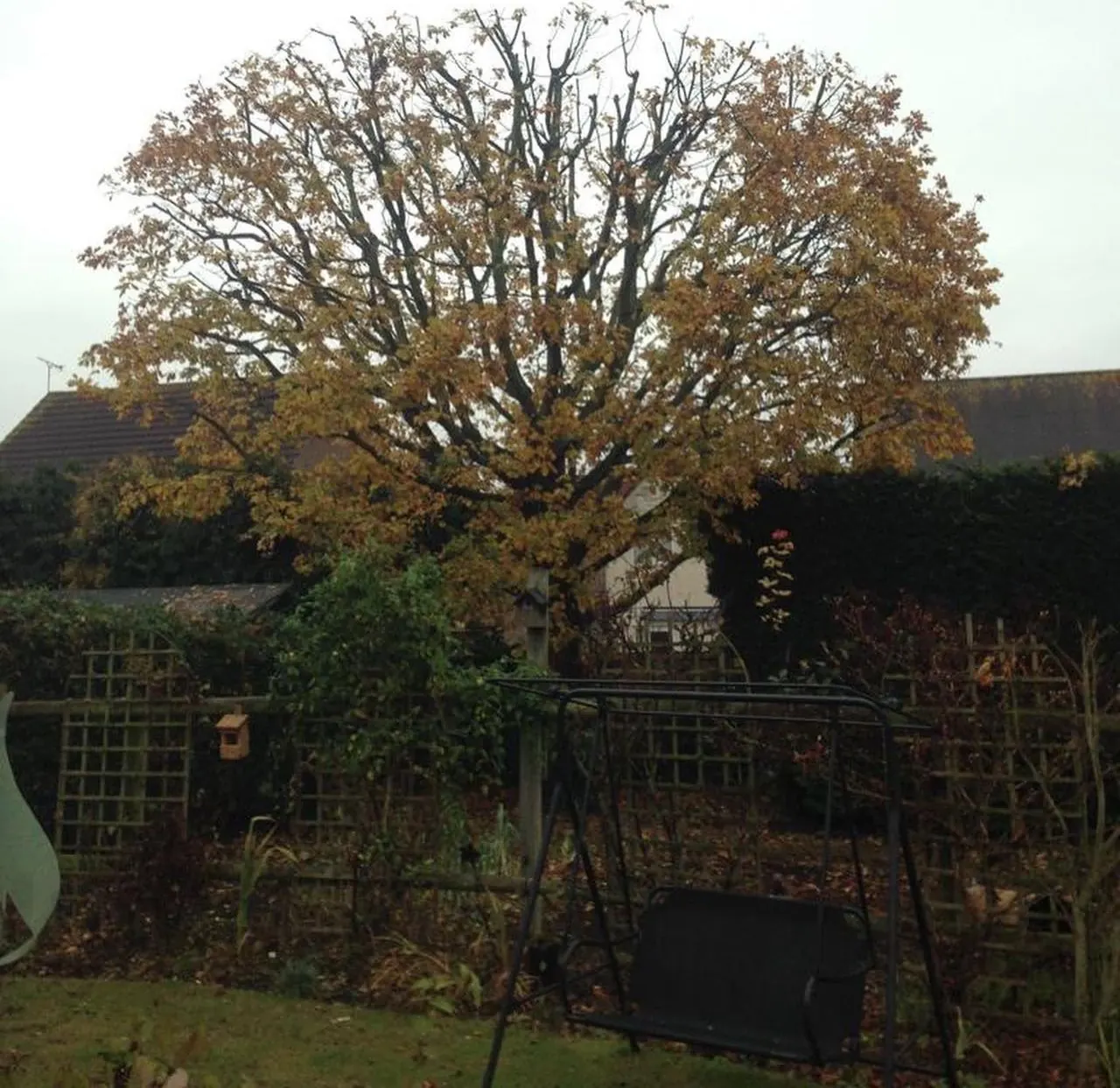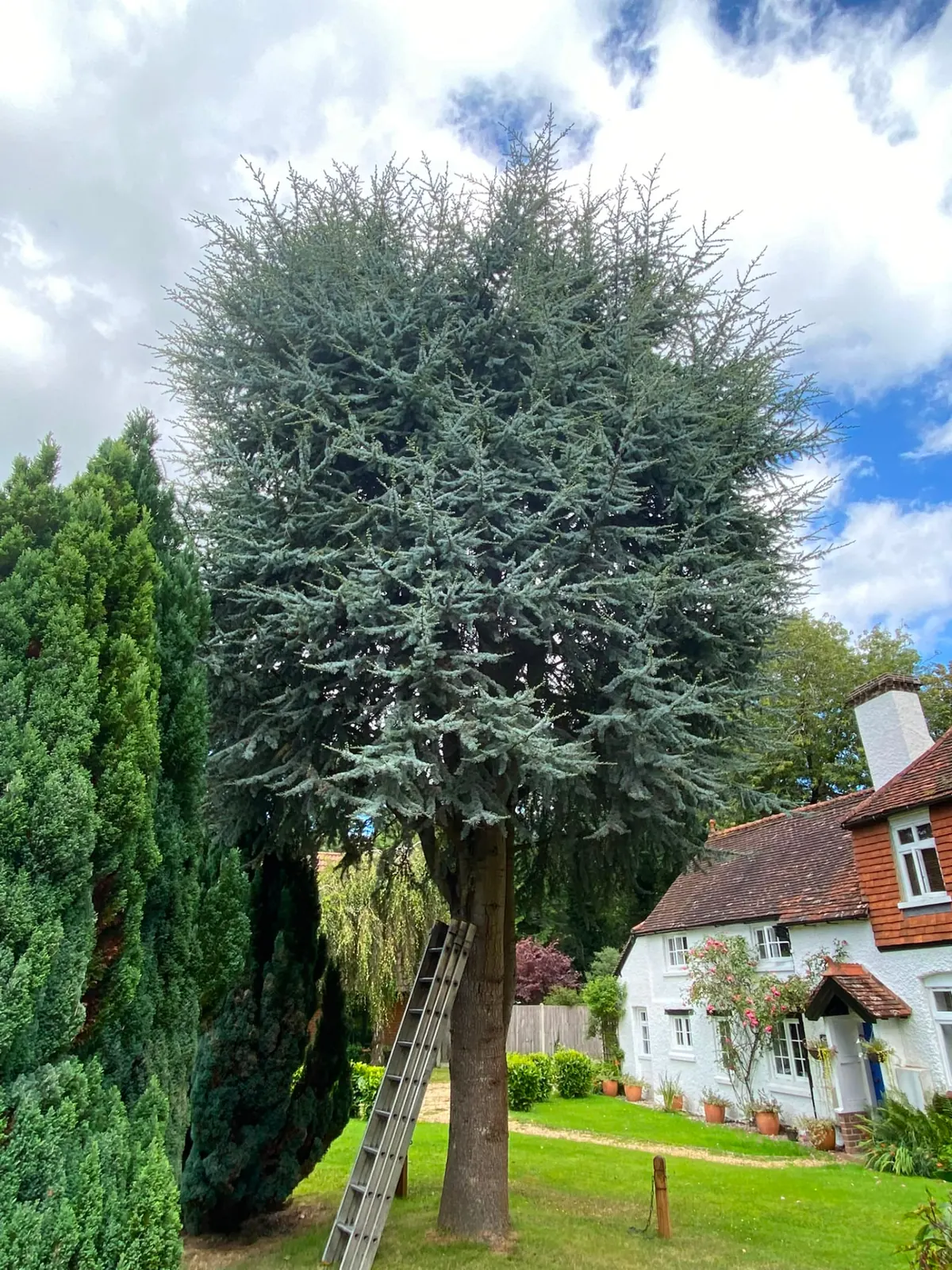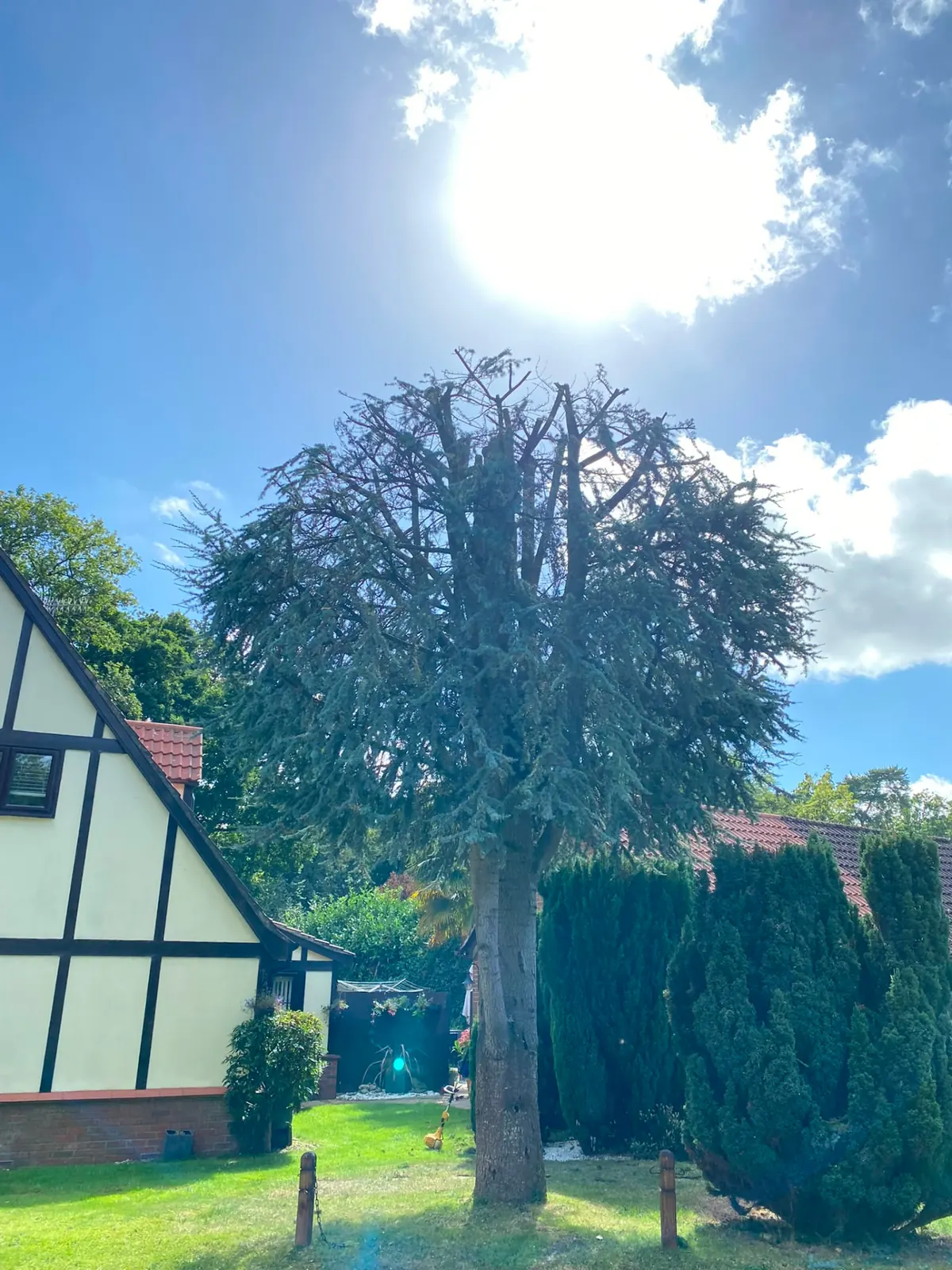
Topping damage
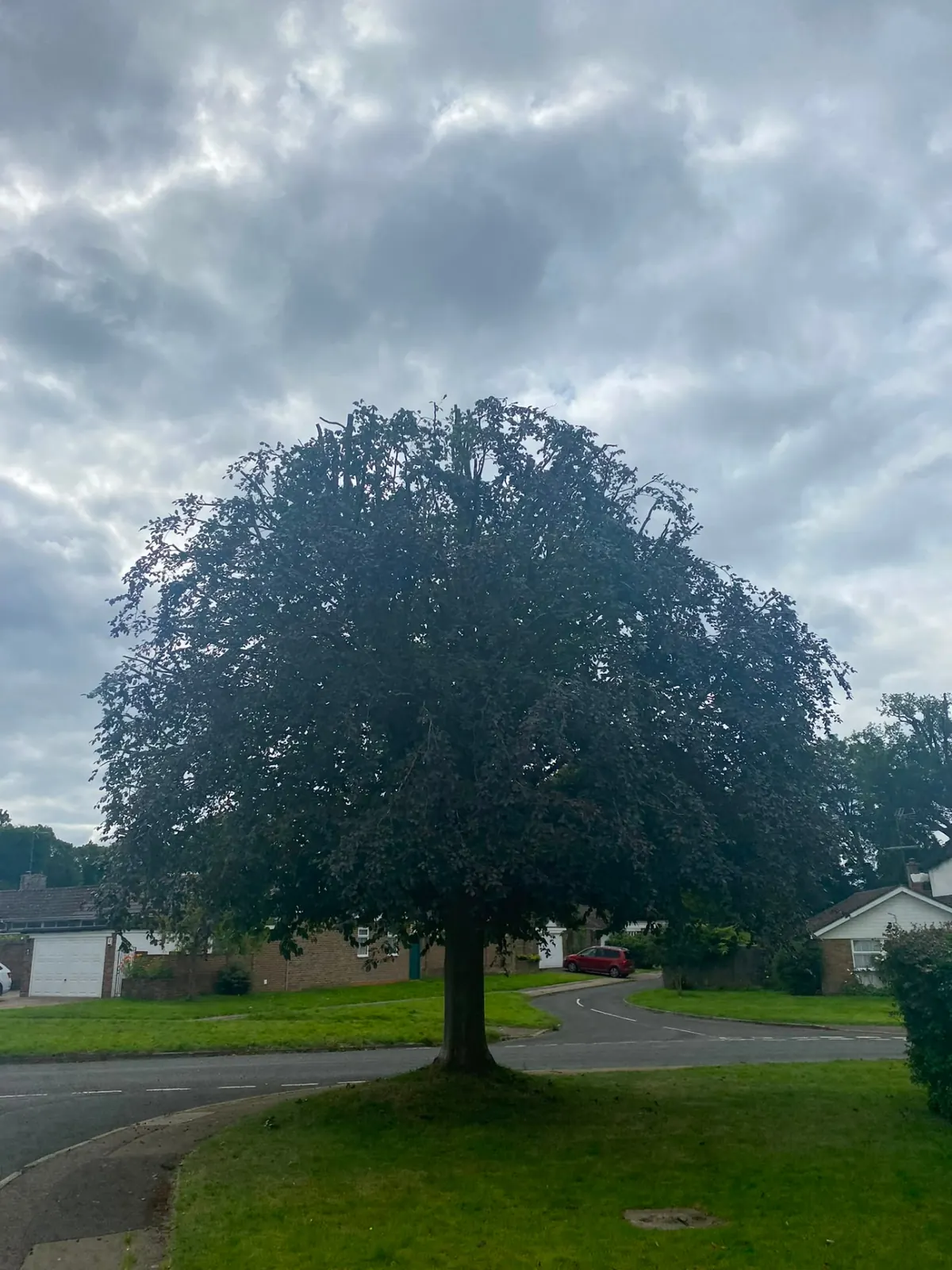
Flat stub cuts cannot seal properly and invite decay straight into the main stem, sometimes years before it is visible.
Crown reduction
A crown that has outgrown its plot does not need the top taken off, it needs its branch length reduced back to sound growth points, in proportion, so the tree keeps its natural shape and stays healthy while it does the job of clearing a roofline, a boundary or a view.
12 years reducing crowns, 59+ five-star Google reviews, £10m employers' and £5m public liability cover.
12 yrs
Hands-on crown reduction and canopy management across the borders
£15m
Total insurance cover, £10m employers', £5m public and products
NPTC
City & Guilds certificates in climbing, aerial rescue and aerial cutting
7 days
Typical wait for a free site visit, with the written quote the same day
The service
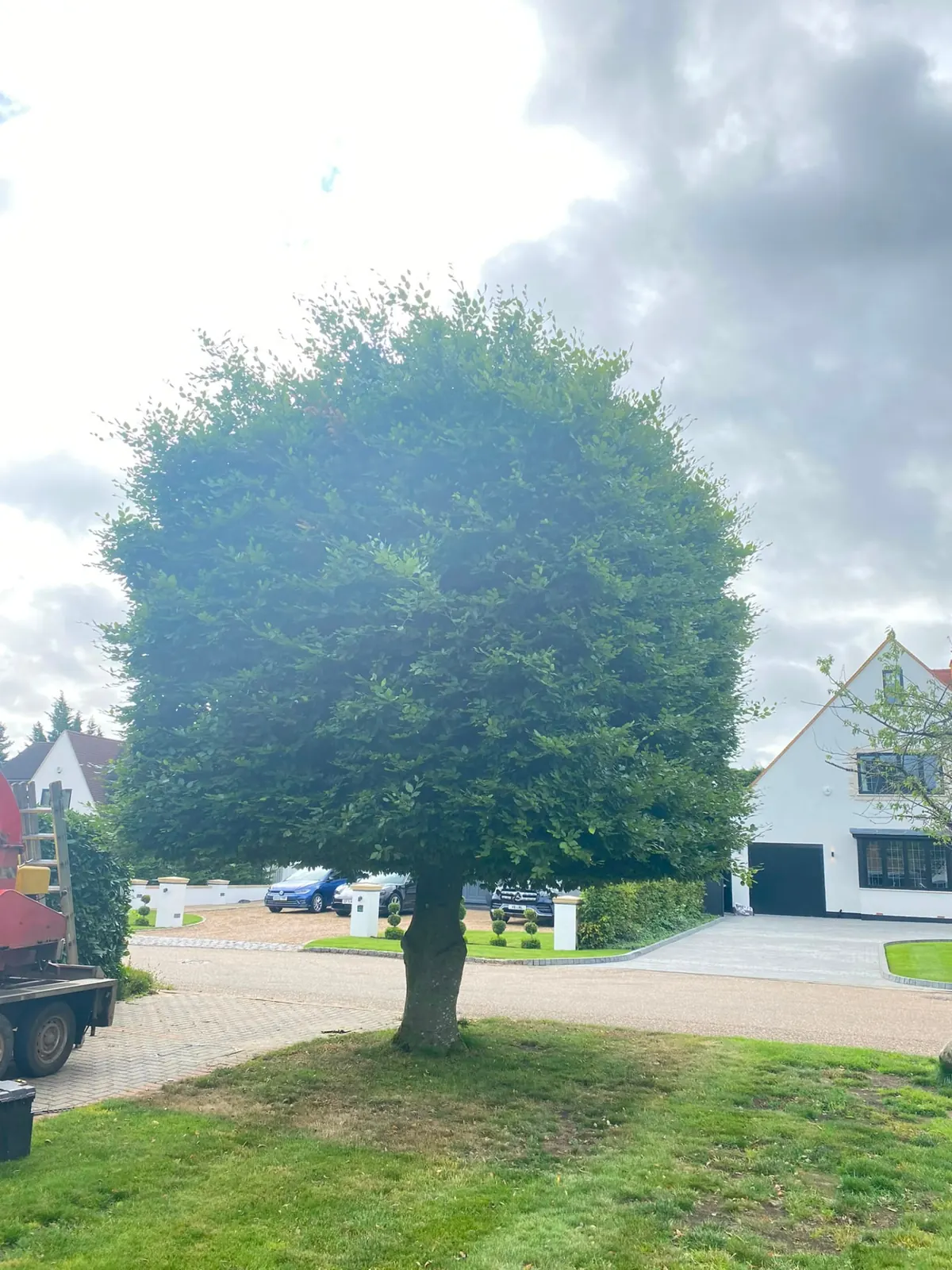
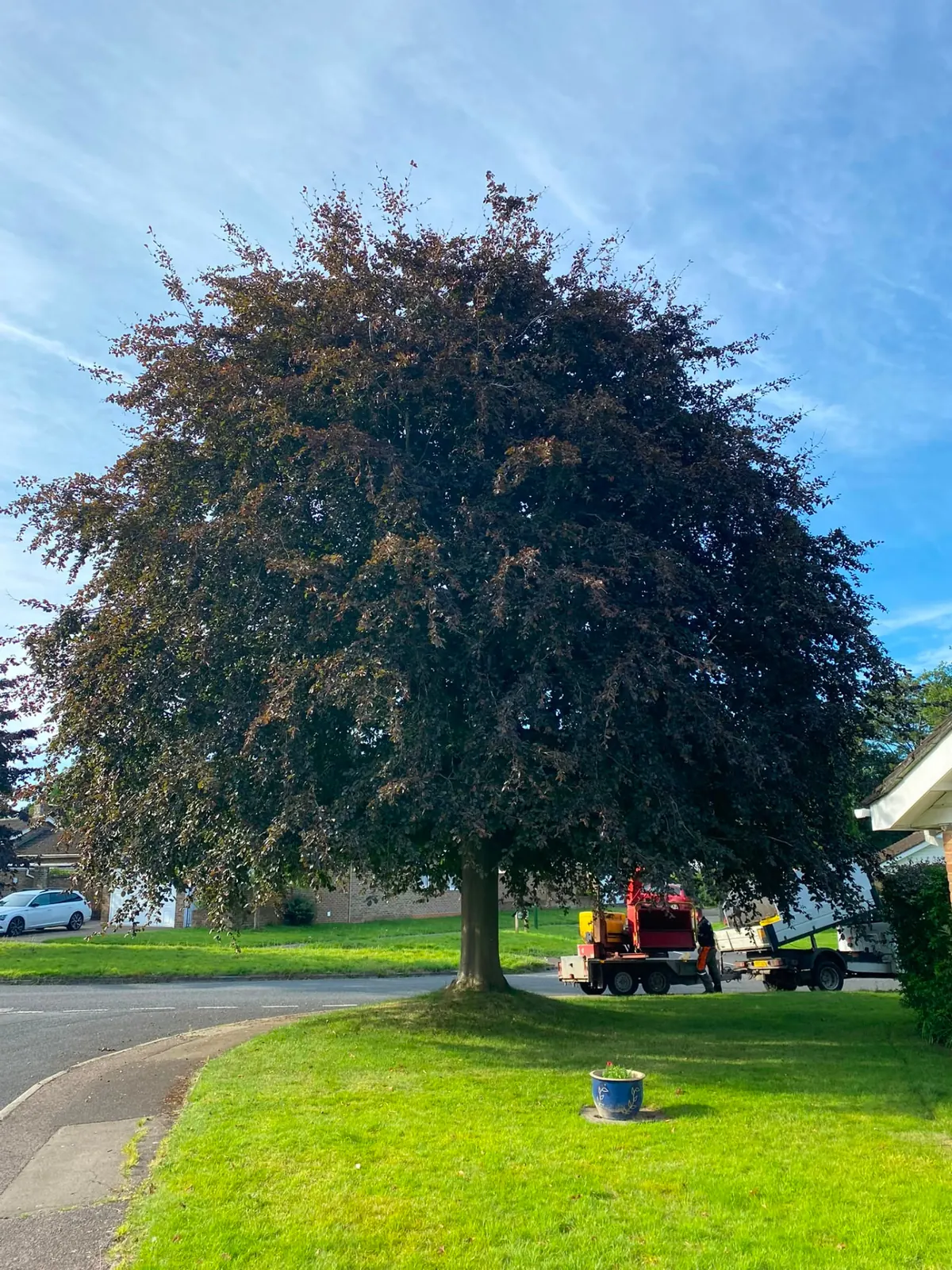
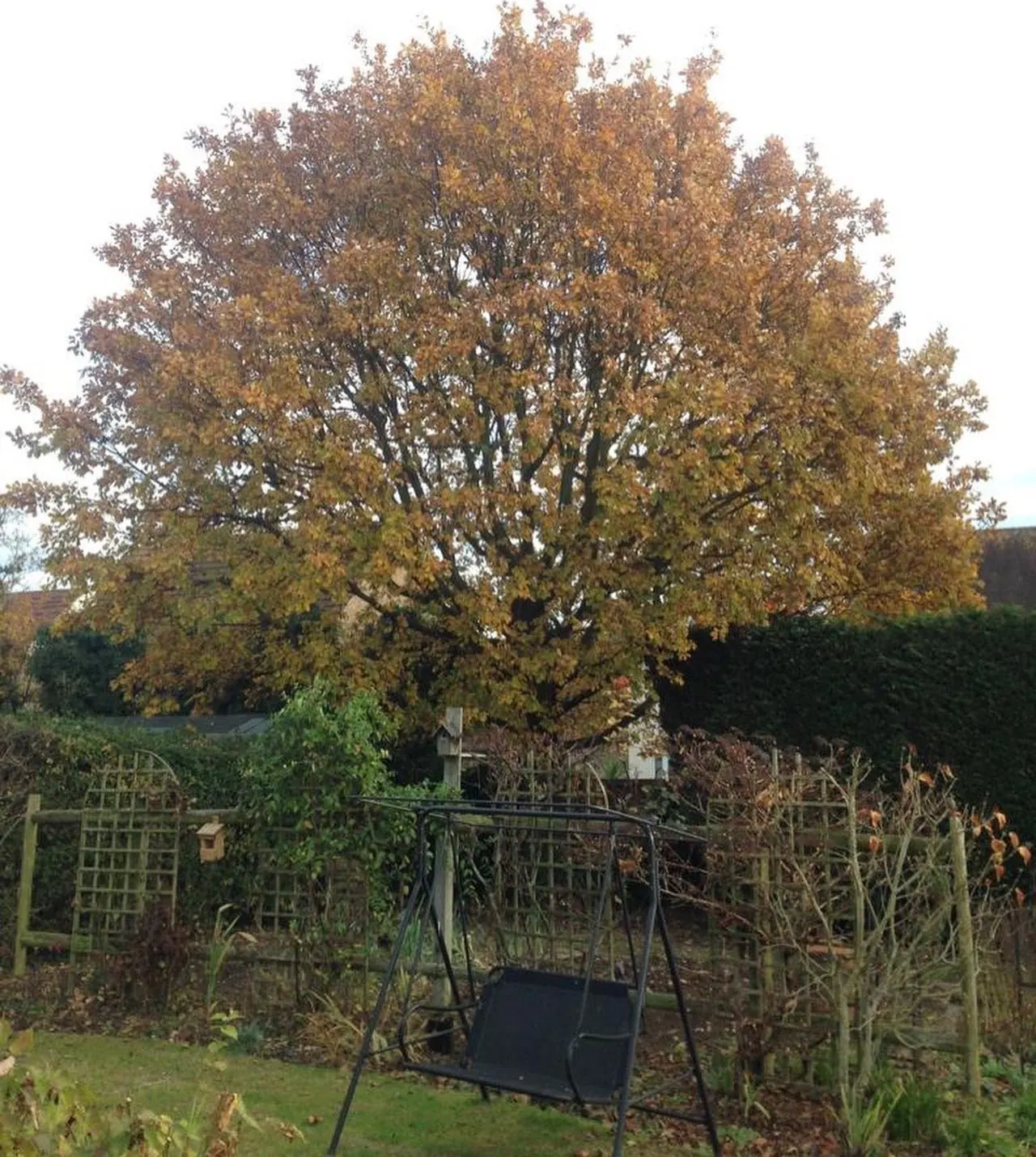
Crown reduction is the practice of shortening a tree's branches back to a suitable growth point, reducing the overall size and spread of the canopy while keeping the tree's natural branch structure intact. Done properly, it is not a haircut across the top, it is dozens of individual cuts, each one made back to a lateral branch or bud large enough to take over growth, following the shape the tree already has. A well-executed reduction of, say, 20% of branch length looks like a smaller version of the same tree a fortnight later, once the leaves have filled back out.
It is used where a tree has simply become too large for the plot it is in: overhanging a roof in Oxted, shading a whole garden in Sevenoaks, crowding a boundary fence in Tunbridge Wells, or pushing branches into overhead cables near Godstone and Lingfield. It also has a genuine engineering role, reducing the weight and leverage on a limb with a known weak union, or bringing a storm-damaged crown back into balance so the tree is not carrying a lopsided load through the next gale.
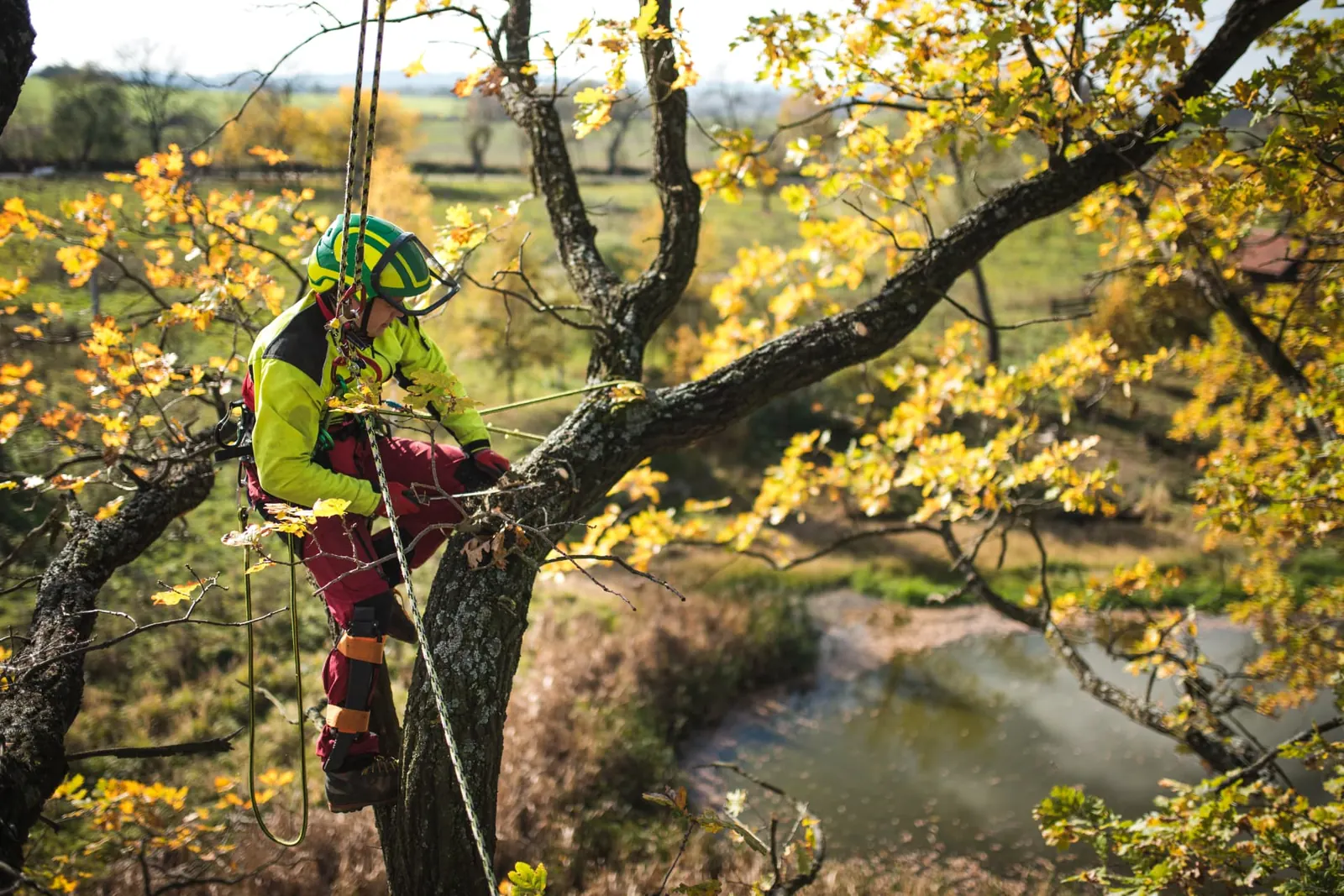
The reason this is not a DIY job with a pole saw is that where you cut matters as much as how much you take off. Cutting mid-internode, rather than back to a suitable lateral, leaves a stub that cannot heal properly and tends to throw a mass of weakly-attached epicormic regrowth exactly where you did not want more weight. Jack works to recognised arboricultural good practice (the British Standard for tree work), holds NPTC and City & Guilds certificates in climbing, aerial rescue and aerial cutting, and the work is covered by £10m employers' liability and £5m public and products liability, because most of a reduction happens on a rope, above a garden that is still in use underneath.
Homeowners with an oversized crown, landlords managing overhanging trees, and anyone with branches near a roofline, cable or boundary.
A canopy that has outgrown its space, storm-damaged limbs needing rebalancing, or a tree that is shading a garden or greenhouse more than it should.
Targeted pruning cuts to suitable growth points, arisings chipped and cleared, and a tidy finish inspected before we leave.
If the tree carries a TPO or sits in a conservation area, we submit the council application on your behalf before any cut is made.
What happens if it's left
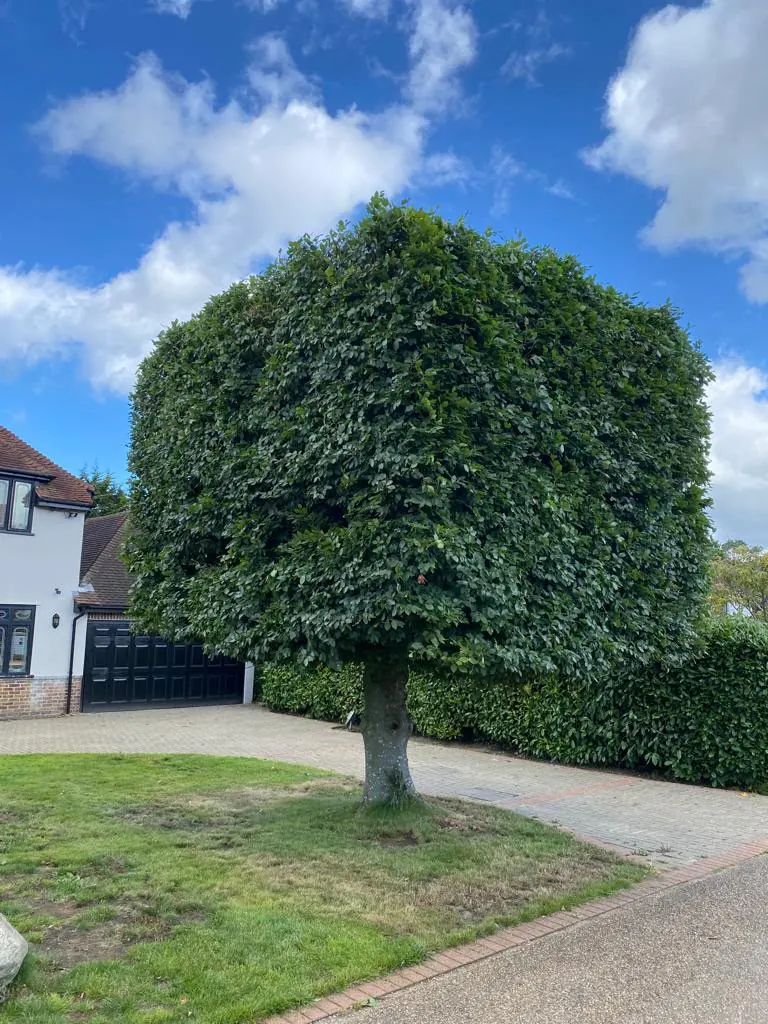
The most common damage we see is not from neglect, it is from someone with a chainsaw and no training being asked to 'take the top off'. Topping cuts through the main stems mid-length rather than back to a lateral, leaving flat, exposed stubs with no living tissue to seal the wound properly. The tree responds by throwing dozens of thin, fast-growing shoots from just below every cut, attached only to the outer bark rather than through solid wood.
That regrowth grows back thicker and faster than the branch it replaced, usually within two or three seasons, so the 'problem' returns worse than before and the tree needs cutting again, except now every one of those new shoots is a weakly-attached limb waiting for the next storm. Meanwhile the flat-cut stubs are an open door for decay fungi, and rot can travel down into the main stem long before it shows on the bark.
The other mistake is over-reduction in one visit. Recognised pruning practice exists partly to stop exactly this: taking too much canopy off at once shocks the tree, starves it of leaf area it needs to photosynthesise, and can trigger stress responses or dieback, particularly in species that do not recover well from hard pruning such as beech and some conifers. A staged reduction over more than one visit is sometimes the right call, and that is a conversation to have at quote stage, not after the cuts are made.
Flat stub cuts cannot seal properly and invite decay straight into the main stem, sometimes years before it is visible.
Epicormic shoots from a topped tree are poorly attached and grow back faster and denser than the original branch.
A bad reduction has to be corrected properly later, so you effectively pay for the job twice.
Reducing a TPO or conservation-area tree without consent is prosecutable, regardless of how good the pruning is.
Leaving a known weak union unreduced through a storm season is how limbs come down on sheds, cars and fences.
Delaying a reduction only means more branch length has to come off next time, which is harder on the tree.
What you get
Cuts follow the tree's own branch structure, so the canopy looks proportionate rather than shorn.
Cutting back to a lateral seals faster and avoids the decay risk that comes with a flat topping cut.
Correctly reduced trees do not throw the dense epicormic growth a topped tree does, so the next reduction is further away.
Taking length off long limbs cuts the leverage they exert in wind, lowering the chance of a limb failure.
A reduced crown lets more daylight into a garden or greenhouse without removing the tree entirely.
Work carried out to recognised arboricultural good practice, under £10m employers' and £5m public liability cover, with TPO paperwork handled for you.
Crown reduction sounds like a single service but the method, the percentage removed and the tools used all shift depending on the species, the target and how the tree has been managed before. Here is what actually changes.
A reduction is specified as a percentage of branch length removed, not a height in metres, because a tree's shape is defined by its branch structure rather than a flat ceiling. A '20% reduction' means each branch, working out from the tips, is shortened by roughly a fifth of its length, cut back to a lateral growth point strong enough to take over as the new leading shoot. The result is a canopy the same overall shape, just smaller, which is the whole point.
How much can safely come off in one visit depends on the species, its age, health and how it has responded to pruning before. Vigorous species such as willow and poplar tolerate a harder reduction than beech, oak or most conifers, which recover more slowly and can be pushed into stress if too much foliage is removed at once. Where a tree needs a larger reduction than is safe in a single visit, staging the work over two seasons is sometimes the honest recommendation rather than doing it all at once and risking dieback.
Every cut in a proper reduction is a target cut: back to a lateral branch or bud of a size capable of sustaining growth, at the correct angle, leaving the branch collar intact so the tree can compartmentalise the wound. There is no such thing as a correct 'flat' cut mid-branch in this work, every stub left without a lateral to grow from becomes a point of decay and a source of weak regrowth.
Topping, cutting main stems back to an arbitrary height regardless of branch structure, is not a recognised arboricultural technique and is not something we do, even if it is what a client initially asks for. Where someone genuinely wants a tree smaller than a sensible single-visit reduction allows, the honest options are a staged reduction over more than one visit, or looking at whether the tree is the right species for that spot long-term.
Most domestic reductions in gardens across Oxted, Caterham and Godstone are climbed, rope and harness access lets the climber work precisely to individual growth points without machinery on the lawn. It is slower but leaves no tracking marks and suits tight, obstacle-heavy gardens with fences, greenhouses and borders to protect.
Where access allows, a driveway, a wide side return, or a rural plot near Lingfield or East Grinstead, a mobile elevated work platform can speed the job up and gives a very stable, controlled cutting position for larger crowns. Which method applies is assessed at the site visit and reflected in the quote, since MEWP hire changes the cost structure of the day.
Fast-growing species, willow, poplar, some limes and leylandii, put on vigorous regrowth after a reduction and are often back needing attention within three to five years, so a maintenance cycle is worth planning for at the outset rather than treating it as a one-off. Slower species such as oak and beech hold a reduction for considerably longer, often a decade or more, but recover more slowly if over-cut, which is why conservative percentages are used on them.
Ash affected by ash dieback needs a different conversation altogether: brittle wood changes what can safely be climbed, and a reduction on a badly affected ash may be assessed as unsafe to carry out at all, with removal the more honest recommendation. We flag this at the site visit rather than after work has started.
Arisings from a reduction are chipped on site and taken away as standard, and the garden is raked and swept before the crew leaves, there is no separate clearance bill tacked on afterwards. If you would like to keep some of the timber or want the chip for mulching beds and paths, logs are available at £100 per tonne bag and woodchip at £50 per truck load up to 3 tonne.
For trees under a TPO or in a conservation area, the reduction still needs council consent before any cut is made, a reduction is treated the same as any other works to a protected tree. We submit that application, including a clear description of the percentage and method proposed, on your behalf as part of the job.
Questions
Related work
A dense canopy blocking light or catching wind like a sail does not need a smaller shape, it needs less density.
When a tree is fine everywhere except one side, pressing on a wall, tangled in an overhead line, or crowding a boundary fence, a full crown reduction is more than the problem needs.
Dead and hanging limbs don't announce themselves before they fail.
We cover Oxted, Westerham, Edenbridge, Sevenoaks, Biggin Hill, Bromley, Tunbridge Wells, Redhill and the surrounding villages, see the towns our tree surgeons cover across Surrey and Kent, browse all tree surgery services, read about Jack and the crew, or go straight to the free tree surgery quote form.
Free quote
Send the form or call and we will book a free site visit, usually within 7 days. You get an honest recommendation on the reduction the tree actually needs and an itemised written quote the same day, no obligation, no sales call afterwards.
Call 07375 701290Five Pebble Hill Cottages, Westerham Road, RH8 0EA · Mon–Sat 8am–9pm · Sunday closed